
What is digital transformation?
A common definition of digital transformation is: “The process of implementing digital technology to fundamentally change an organization’s customer experience, business and operating processes, or culture.” But the real power of the transformation lies in integrating digital technologies strategically, not just adopting them in isolation.
Following is a list of fundamental technologies for the digital transformation of a manufacturing environment: v
- Cloud computing that provides on-demand, scalable infrastructure and services.
- IoT that connects physical or smart devices and machinery to digital systems and enables real-time data collection, remote monitoring and automation.
- Big data and analytics that collect, store and analyze large volumes of structured and unstructured data.
- Artificial intelligence (AI) and machine learning (ML) that automate tasks, recognize patterns and provide predictive insights.
- Cybersecurity that protects digital assets, data and systems from threats.
- Edge computing that processes data closer to where it’s generated.
- Enterprise resource planning (ERP) and integrated platforms that integrate core business processes and data.
- Robotic process automation (RPA) that automates repetitive, rule-based tasks.
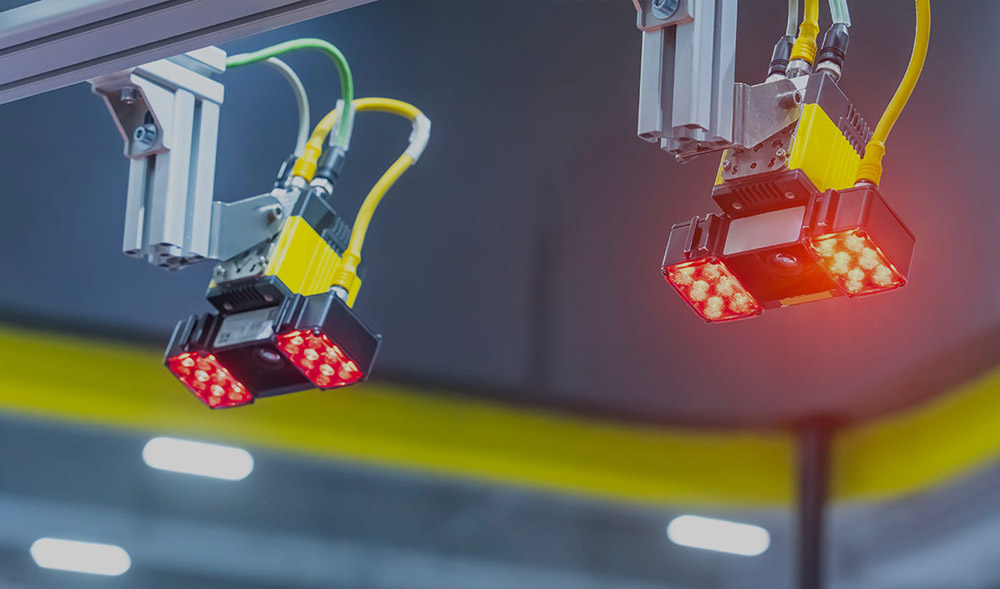
Deploying internet-connected smart sensors is a strategic starting point for manufacturers that are intent on improving production processes, reducing product defects and improving customer service.
What are smart sensors?
In blog post by Fierce Electronics smart sensors are defined as “devices that take information from a physical environment and use embedded microprocessors and wireless communication to monitor, examine, and maintain various systems. They have the ability to collect environmental data more accurately with less erroneous noise.”
The challenge is that smart sensors generate enormous amounts of data that must be analyzed and translated into actionable insights. Once smart sensors begin data collection, a stack of technologies is needed to transmit, store, process, analyze and visualize that data. A process flow would look like the following:
What are the various types of smart sensors used in an internet-connected (IoT) manufacturing environment?
- Level sensors that are used to measure the volume of space taken up in a container.
- Temperature sensors that monitor a component’s temperature so a corrective action can be taken if the temperature gets too high or low.
- Pressure sensors that are used to monitor the pressure of gases or fluids in a pipeline. A sudden drop in pressure might indicate a leak or a flow-control-system issue.
- Infrared sensors that are used in thermal imaging cameras and noncontact infrared thermometers are used for temperature monitoring.
- Proximity sensors that are used to detect the location of a person or object in relation to the sensor.
How smart sensors are transforming manufacturing
According to SteelTechnology.com, “Smart sensors play a pivotal role in ensuring the health and durability of manufacturing equipment. Their indispensable function involves the implementation of predictive maintenance strategies, seamlessly facilitated by Internet of Things (IoT) devices. By harnessing real-time data and advanced analytics, these sensors have the capability to foresee potential issues before they escalate into critical problems, effectively averting costly breakdowns. The impact of predictive maintenance goes beyond immediate issue prevention, positively influencing the overall lifespan of manufacturing equipment. This proactive approach not only strengthens the resilience of machinery but also results in a significant reduction in maintenance costs.”
Overcoming the cost barrier: Turnkey smart manufacturing solutions
For the majority of small to medium manufacturers, the path to smart manufacturing is fraught with barriers, the most formidable of which is the perceived cost. Robert Schmid of
Deloitte Digital suggests, in an article posted on TechTarget, that manufacturers consider turnkey solutions and: “Start small. With a specific information need in mind, companies can quickly scope a small project that offers demonstrated ROI and tangible benefits. Engineers can then bring to bear standardized kits of technology featuring cloud-based platforms and common sensors to speed implementation. Typically, such turnkey proofs of concept can begin delivering value in weeks rather than months.”
Potential benefits of software-as-a-service turnkey smart manufacturing solutions
- Fully integrated, ready-to-deploy system that includes hardware, software, networking and services — all provided by a single vendor or integrator.
- Fast deployment — no need to assemble and integrate dozens of tools.
- Limited in-house tech/IT/OT integration expertise required.
- Predictable, scalable pricing models (subscription or usage-based).
- Interoperability with legacy systems when prebuilt into the platform.
A whitepaper sponsored by Siemens addresses the cost concerns of small and medium manufacturers by highlighting the benefits of turnkey software-as-a service solutions.
“In the past, a network-connected factory with computer analytics would require network cabling throughout the factory, with a server room and up-to-date data storage, processing power and cybersecurity investments. Today, it requires a monthly subscription to a service like Microsoft Azure or AWS. These cloud service vendors provide secure and scalable data storage and processing capabilities.”
Vendors that provide end-to-end, pre-integrated solutions that handle connectivity, storage, processing, analytics and visualization in one package include:
- Siemens MindSphere
- PTC ThingWorx
- GE Predix (legacy)
- Ignition by Inductive Automation
- AWS IoT SiteWise
- Azure IoT Central
Core in-house skills needed for smart manufacturing
Industrial IoT (IIoT) & Smart Sensor Integration
- Network configuration and device management
- Sensor data acquisition and calibration
- Edge computing and device-to-cloud communication
Data Management & Analytics
- Data engineering (collecting, cleaning and structuring data)
- Data visualization (creating dashboards, KPIs, OEE metrics)
- Predictive analytics using machine learning for forecasting maintenance, downtime or demand
- Basic understanding of cloud platforms (AWS IoT, Azure IoT, Siemens MindSphere, etc.)
Cybersecurity
- Industrial network security management (firewalls, VLANs, access control)
- Data privacy and compliance
- Threat detection and response in an operational technology (OT) environment
Operational Technology (OT) Expertise
- Knowledge of PLCs, HMIs, SCADA systems
- OT network management and troubleshooting
- Process control and industrial automation
Digital Manufacturing & Simulation
- CAD/CAM expertise
- Simulation tools for virtual commissioning, production flow or digital twins
- Additive manufacturing (3D printing) operation and maintenance
Robotics and Automation
- Programming and maintaining industrial robots
- System integration (robot cells, conveyor systems, vision systems)
- Robot safety protocols and standards
IT/OT Convergence Skills
- Understanding how IT systems (ERP, MES, CRM) integrate with shop floor operations
- Middleware configuration and API integration
- Cloud-to-shopfloor interoperability
Change Management & Leadership
- Leading teams through digital adoption
- Workforce upskilling and continuous learning programs
- Aligning business objectives with technology investments
Lean/Continuous Improvement with Digital Tools
- Applying Lean, Six Sigma or TPM in a digitally enabled environment
- Using real-time data for waste reduction, process optimization and quality improvement
Additional beneficial in-house skills
- Project management for digital initiatives
- Vendor management for tech partnerships
- Basic AI/ML understanding for process optimization applications
The CalSEA programs provides small and medium manufactures with no cost training (link to services WD page) that helps existing employees acquire new skills and enhances the facilitation of new talent development and acquisition. From project management courses in Lean and Six Sigma to CAD/CAM and Additive Manufacturing (and much more), our community college training partners can help you elevate your manufacturing processes and environment.